How to Change Product Image Size in Shopify

This blog provides a detailed guide on optimizing your Shopify product image size, helping you enhance your store's performance with faster load times and consistent visuals for a better customer experience.
Updated October 21, 2024

If you're a Shopify store owner, optimizing your product displays is essential for giving your store a professional look that customers will enjoy. Apart from optimizing your product images, you should also make sure they're the right size to increase customer engagement and help boost sales.
Consistent product image sizing ensures a cohesive, professional appearance throughout your Shopify store. However, if your Shopify product image size is too big, it can lead to slower load times, frustrating your customers. By resizing your images correctly, you can improve site performance and create a more enjoyable shopping experience for your customers.
Importance of Optimizing Shopify Image Sizes
- Bandwidth efficiency: Smaller image files consume less bandwidth, lowering hosting expenses.
- Mobile performance: Optimizing image sizes and formats for mobile ensures a fast, responsive experience across devices.
- Conversion rate: Faster site performance encourages customers to complete purchases and keeps them coming back.
» Read more about why you should optimize your Shopify images
How to Change Product Image Size in Shopify

High-quality product images are necessary for attracting more buyers to your Shopify store. There are two ways to change product image sizes in Shopify: resizing the original image files (permanent change) or adjusting how images display in your theme (visual change only).
Method 1: Resize the Actual Image File (Permanent Change)
Use this method when you want to permanently change the dimensions of your image files. This is useful for reducing file sizes or meeting specific dimension requirements.
Steps:
From your Shopify admin, go to Content → Files. Find the image you want to resize and click on the thumbnail to open the file editor.
Click Resize in the editor toolbar.
Enter the new width for the image in pixels.
By default, Lock aspect ratio is selected, which automatically adjusts the height to maintain the image's proportions. If you want to adjust only width or height independently, click Unlock aspect ratio to deselect it (note: this can distort your image).
Click Apply to lock in the resize. Then click Save to save your resized image.
Note that:
This permanently changes the image file dimensions.
Maximum image size: 5000 x 5000 px (25 megapixels).
Maximum file size: 20 MB.
Recommended size for square product images: 2048 x 2048 px.
Always maintain the aspect ratio to avoid distortion.
Method 2: Change How Images Display in Your Theme (Visual Change Only)
Use this method to adjust how product images appear on your storefront without changing the actual image files. The available options vary depending on your theme.
Steps:
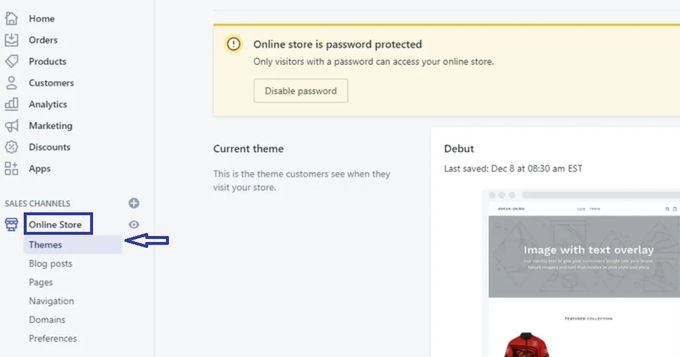
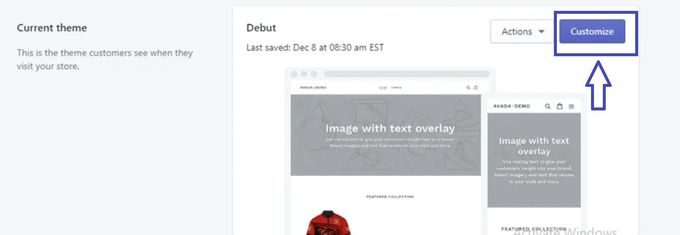
From your Shopify admin, go to Online Store → Themes. Find your current theme and click Edit Theme.
At the top of the theme editor, use the dropdown menu to select Products → Default product (this loads the product page template).
In the left sidebar, click on the Product information section or the section that contains your product images.
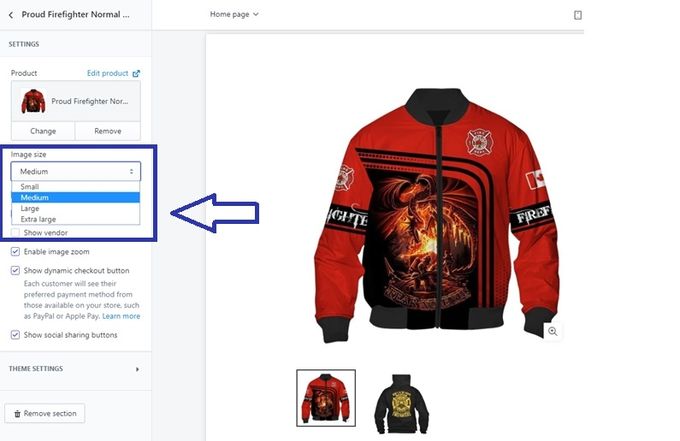
In the settings panel on the right, look for layout and display options. Common options include:
Width: Choose between "Page" or "Full" width for the section.
Media position: Position images on the "Left" or "Right" side of the product details.
Equal columns: Toggle to make the image and product details columns equal width.
Gap: Adjust spacing between images and product information (measured in pixels).
Color scheme: Select a color scheme for the section background
Padding: Adjust top and bottom spacing for the section.
Scroll down in the settings panel and click Theme Settings to expand it. Look for:
Page width: Controls overall page width (Wide, Standard, Narrow, etc.).
Product card to product page transition: Animation effects.
Other global settings that might affect image display.
Adjust any available settings to change how your product images are displayed and positioned.
Click Save in the top right corner to publish your changes.
Changes the layout and positioning of product images on the page.
Adjusts spacing and alignment between images and product details.
Modifies the visual presentation without changing actual image file sizes.
Settings apply to all products using this template.
It does NOT change the actual pixel dimensions of your image files.
It does NOT offer "Small, Medium, Large" preset size options in most themes.
It does NOT resize images permanently.
Best Practices for Product Images
Use consistent aspect ratios across all product images for a professional look, especially on collection pages.
Upload high-quality images - Shopify automatically optimizes them for web display.
Don't manually compress images before uploading - Shopify's CDN handles optimization.
For square images: Use 2048 x 2048 px for best results.
Keep file sizes under 20 MB and resolution under 5000 x 5000 px.
» Check out these steps to optimize your Shopify product images
Recommended Shopify Image Sizes and Files
Image Type | Dimensions (px) |
|---|---|
Product Image | 2048 x 2048 |
Homepage Featured Image | 1920 x 1080 |
Slideshow Image | 1920 x 1080 |
Background Image | 1920 x 1080 |
Logo Image | 250 x 250 |
Blog Post Image | 1920 x 1080 |
Collection Image | 1024 x 1024 |
» Need more guidance on Shopify images? Check out this complete guide
Shopify images can appear blurry for several reasons:
- Inappropriate image size may cause images to look cut off or blurry if smaller than the recommended dimensions.
- Low-resolution uploads can lead to pixelation.
- Shopify’s automatic image compression improves loading times but may also reduce clarity.
Shopify Image File Formats
Selecting the right file format is crucial for optimizing your Shopify images, especially considering that a product can have multiple images on Shopify. For your Shopify store, JPEG and PNG are the top recommended file formats to ensure quality and performance.
JPEG
JPEGs are perfect for photos and images with intricate colors. They use lossy compression to maintain fast loading times with minimal quality loss, making them suitable for product images, banners, and blog posts.
PNG
PNGs work best for graphics and icons that feature flat colors and require transparency. This format is ideal for logos, icons, and designs that need crisp edges, ensuring high-quality visuals without gradients.
» Learn more in this complete guide on image optimization and recommended Shopify image files
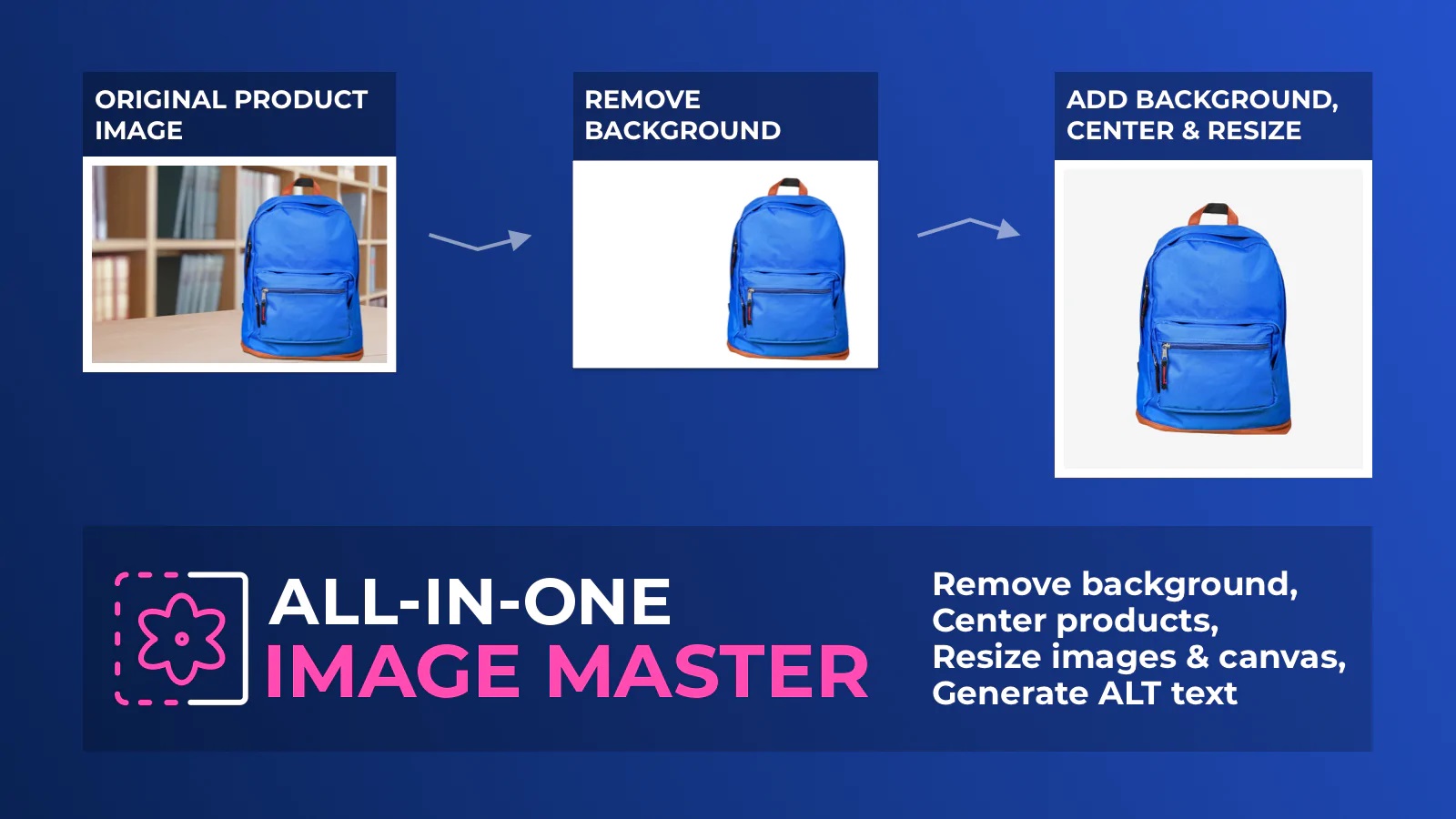
Streamline Image Resizing With Egnition

Having the right Shopify product image size is essential for creating an exceptional customer experience and driving sales. Ensuring that all your images are consistently sized helps create a unified look across your store, which can significantly enhance user engagement. Well-optimized and resized images enhance your store's visual design to increase sales. Don’t let blurry or poorly sized images hinder your store's potential.